
Problems With Range Rover Engines
Spend long enough on Land Rover forums and a pattern emerges. Someone buys a used Range Rover — usually a Sport, a Velar, or an Evoque — at what feels like a sensible price. Six months later they're facing a repair bill that would buy a decent second car. The Range Rover's engines are genuinely impressive pieces of engineering. They're also, depending on the generation and how they've been maintained, some of the most expensive mistakes a used car buyer can make. This article covers exactly what goes wrong, which engines carry the most risk, and what you can do about it before — or after — signing on the dotted line.
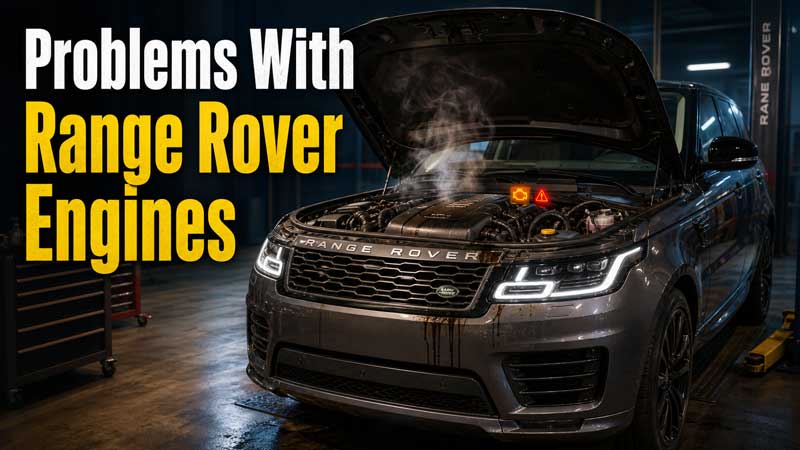
This isn't about bashing a great British icon. It's about giving you the full picture — so you can buy smart, maintain properly, and avoid eye-watering repair bills.
The Engines at the Heart of the Problem
Land Rover has used a wide range of powerplants across its Range Rover lineup over the years. The older V8 diesel units — the 3.6 TDV8 and the 4.4 SDV8 — have a well-documented history of serious mechanical failures. More recently, Land Rover's own-developed Ingenium engine family has introduced a new set of headaches for owners of the Sport L494, the Velar, and the Evoque. Understanding which engine sits under your bonnet is the first step to understanding your risk.
The Old Guard: TDV8 and SDV8 Engines
The 3.6-litre TDV8 — found in the Range Rover L322 facelift and the first-generation Range Rover Sport L320 — has earned itself a reputation as a ticking time bomb if not properly maintained. According to Diesel Heads Workshop Reports, the most common cause of catastrophic failure in the 3.6 TDV8 originates with the turbochargers: a breach within the oil system allows oil to enter the engine intake, and depending on how quickly you catch it, the damage can range from expensive to terminal.
The valve covers on this engine are another Achilles heel. As Different Car Review explains, the valve cover gaskets wear out and the covers themselves can crack, causing a boost leak. Symptoms include the car going into limp mode, a check engine light, black smoke under acceleration, and noticeably increased fuel consumption. Not exactly a subtle warning.
The larger 4.4 SDV8 suffers from a very similar turbocharger oil ingestion problem, though it benefits from an improved valvetrain that doesn't share the corrosion issues of its smaller sibling. Still, anyone being offered a used SDV8 Range Rover at a tempting price should take note: these engines are described by experienced owners on PistonHeads as having "many, many issues" when not meticulously maintained.
The Ingenium Era: New Engine, Old Problems
When Land Rover launched its in-house Ingenium engine family, there was genuine excitement. A modern, efficient, lighter engine designed from scratch — what could go wrong? As it turned out, quite a lot.
Timing Chain Failure: The Big One
The number one issue with the Ingenium diesel engine is timing chain failure — and it's not a gradual, gentle decline. When the timing chain stretches, snaps, or slips out of sync, it can wreck the entire engine in a matter of seconds. On the Range Rover Sport L494 and the Velar, this is a well-documented and recurring fault. The root cause? Oil dilution.
Here's how the chain of events unfolds: diesel Range Rovers need their Diesel Particulate Filter (DPF) to regenerate periodically — essentially burning off trapped soot at very high temperatures. In transversely-mounted engines, the DPF sits underneath the car in cooler ambient air, meaning it often can't reach the 800°C needed to fully regenerate. So the system injects extra diesel on the exhaust stroke to raise temperatures — but if the regeneration cycle doesn't complete and the car is turned off mid-cycle, that excess fuel ends up diluting the engine oil. Diluted oil provides inadequate lubrication to the timing chain tensioners, which then wear rapidly. The rattle you hear on a cold start? That's the beginning of the end.
Oil Dilution and the DPF Cycle
According to Land Rover's own Service Compliance Notification JLRP00100, oil dilution becomes problematic once it exceeds 6.1%, triggering a "Service Required" warning earlier than the advertised 21,000-mile service interval. For many owners doing short urban journeys — exactly the kind of driving a luxury SUV often sees — this is a constant battle.
The advice from specialists is consistent: shorten your oil change intervals significantly, use quality oil meeting Land Rover's specifications, and if you do lots of short trips, make sure you regularly take the car on a longer motorway run to allow a proper DPF regeneration cycle to complete.
How the Models Compare
Not all Range Rovers are created equal when it comes to engine reliability. Here's a clear comparison of the most common issues across the main models:
| Model | Engine | Primary Issue | Risk Level |
|---|---|---|---|
| Range Rover L322 (Sport) | 3.6 TDV8 | Turbo oil ingestion, cracked valve covers | High |
| Range Rover Sport L320 | 4.4 SDV8 | Turbo oil ingestion, timing chain | High |
| Range Rover Sport L494 | 2.0 Ingenium Diesel | Timing chain failure, oil dilution, DPF | High |
| Range Rover Sport L494 | 3.0 Ingenium Diesel | Throttle body clogging, inlet manifold cracking | Medium |
| Range Rover Velar | 2.0 Ingenium Diesel | Timing chain, turbo failure, solenoid failure | High |
| Range Rover Velar | 3.0 Ingenium Diesel | DPF blockage, throttle body clogging | Medium |
| Range Rover Evoque | 2.0 Ingenium Diesel | Timing chain, oil dilution, misfire | Medium–High |
| Range Rover Sport L461 (2022+) | P360/P400 Petrol | Coolant pipe leaks, software issues | Low–Medium |
Turbocharger Failures: A Recurring Theme
Across almost every Range Rover engine generation, the turbocharger keeps appearing in the story. On the Ingenium diesel, turbo failures tend to cascade catastrophically. An oil leak or blockage causes the turbo to overheat and fail, often sending oil or coolant flooding into the engine's cylinders. This can cause hydrolock — where the pistons attempt to compress a liquid that physically can't be compressed — bending connecting rods and destroying the engine internals. It's the kind of failure that turns a £3,000 turbo replacement into a £10,000+ engine rebuild.
On the older TDV8s, blocked oil supply or return lines are the most common turbo killer, with worn bearings and seized wastegate actuators also on the list. The fix is straightforward in theory — keep oil clean and change it regularly — but the consequences of neglect are severe.
Other Issues Worth Knowing About
Engine problems don't stop at timing chains and turbos. Here are several other faults that Range Rover owners regularly encounter:
Beyond timing chains and turbos, Range Rover owners regularly encounter a handful of other engine faults that are worth understanding before buying.
- Oil leaks are arguably the most common complaint across the entire lineup. Valve cover gaskets, oil cooler housings, and crankshaft seals are frequent culprits — a burning smell after a run or oil spots on the driveway are the telltale signs, and neither should be ignored.
- Engine overheating is another recurring theme, particularly on older models. Cracked coolant expansion tanks, failed water pumps, and stuck thermostats are regularly reported faults. On the newer L461 Sport, plastic coolant pipes have been flagged as a known concern — it's worth checking the expansion tank and coolant level carefully on any pre-purchase inspection.
- Low oil pressure warnings tend to surface on higher-mileage examples and are often linked to a failed oil pump, blocked oil passages, or sludge buildup caused by extended service intervals. If the oil pressure warning light appears, treat it as a serious alert, not a suggestion.
- On 3.0 diesel Velars and Sports, the plastic inlet manifolds are known to crack under heat stress, causing a loss of boost pressure and triggering the dreaded "Restricted Performance" message on the dashboard. It's a relatively straightforward fix for a specialist, but it's not cheap.
- Finally, on petrol variants, faulty ignition coils, worn spark plugs, and problematic fuel injectors are the most common causes of engine misfires. These are comparatively affordable repairs, but on a car with a full complement of cylinder-specific coils, they add up quickly if left unaddressed.
The 2023–2025 Range Rover: Are Things Getting Better?
The latest generation full-size Range Rover hasn't escaped scrutiny either. According to The Weekly Driver, the 2023–2025 Range Rover has accumulated 59 NHTSA complaints, with engine issues, brakes, and electrical systems topping the list. That's not a disaster by any means, but it does suggest the reliability narrative hasn't fully turned a corner.
To be fair, Land Rover has been issuing software updates to address some of the hybrid system issues on the L461 Sport, including a known compatibility problem with Mode 4 chargers (error code P0AA6-1A) that was identified in 2024. Progress is being made, but it's incremental.
What You Can Do About It
If you own a Range Rover — or are thinking about buying one — here are the most important practical steps to protect your investment:
- Shorten your oil change intervals. Don't wait for the service light. On Ingenium diesel models especially, change the oil every 7,000–10,000 miles regardless of what the system tells you.
- Check for oil dilution regularly. A dipstick that smells of diesel or shows a higher-than-normal oil level is a warning sign.
- Take it on motorway runs. Regular longer journeys allow the DPF to complete its regeneration cycle properly, reducing oil dilution risk.
- Listen for timing chain rattle. A metallic rattling noise on cold start should prompt an immediate specialist inspection — don't ignore it.
- Buy a full service history. On any used Range Rover, especially TDV8 and Ingenium diesel models, a comprehensive and regular service history is non-negotiable.
- Use quality parts. As ARM Motors advises, using genuine or high-quality replacement parts is critical to long-term reliability.
So, Is a Range Rover Worth It?
The honest answer is: yes, but only if you go in with your eyes open.
A well-maintained Range Rover — one with a full, documented service history, regular oil changes, and no history of the timing chain rattle or turbo smoke that should send you running — can be a genuinely excellent vehicle. The problem is that the margin for error is almost zero. Miss a service interval, ignore an early warning sign, or buy a car whose history you can't verify, and you're looking at repair bills that make the original purchase price look modest.
If you're buying used, budget for an independent pre-purchase inspection by a Land Rover specialist, not a general mechanic. Insist on seeing physical proof of service history rather than taking the seller's word for it. And if you're set on an Ingenium diesel, ask directly about oil dilution history and whether the DPF has ever been removed or forced-regenerated.
The badge carries real prestige. The engines carry real risk. Knowing the difference between the two is what separates a great buy from a costly lesson.