Ford Fiesta Mk6 Headlight Guide: Bulb Types, Upgrades, and What Actually Fits

Published by admin on

If yoFord Fiesta Mk6 Headlight Guide: Pre-Facelift vs Facelift, Bulb Types, and What Actually Works

There’s a strange myth circulating online. Type “Ford Fiesta Mk6 headlight” into your favourite search engine, and you’ll be buried under guides talking about H4 bulbs, rubber boots, and cars from 2002.

Here’s the problem: That’s not the Mk6. That’s the Mk5.

The real Ford Fiesta Mk6—sometimes called the MkVI or, in Ford chassis code terms, the Mk6 B257–B299—was produced from 2008 to 2017. It was the first Fiesta built on Ford’s global B-car platform, and it shared DNA with the Mazda2. It was also the car that transformed the Fiesta from a budget runabout into a genuinely desirable supermini.

And its headlights? They’re a tale of two generations.

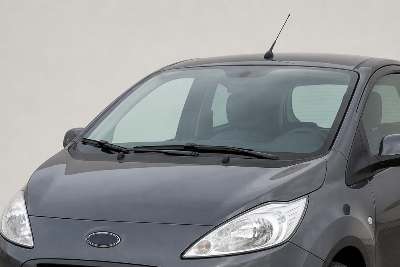
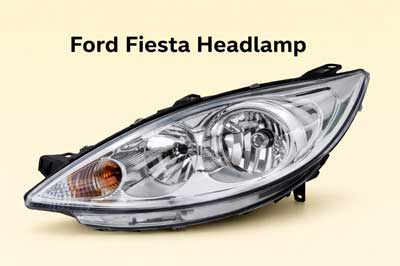
If you own a 2008–2012 car, you’ve got the rounder, softer-faced pre-facelift. If you own a 2013–2017 car, you’ve got the sharper, Aston-grilled facelift. They look similar from twenty feet. But under the skin—and behind the lens—they are completely different animals.

Let me walk you through exactly what you need, why the online guides keep getting it wrong, and how to avoid buying the wrong parts.


The Two Faces of the Mk6

Ford sold over one million Fiesta Mk6s in the UK alone. It was Britain’s best-selling car for years. But midway through its life, Ford gave it a significant refresh.

The pre-facelift (2008–2012) arrived to critical acclaim. Its headlights were large, wrap-around units with separate amber indicator sections. The beam pattern was good for its era, but the bulb access was—how do I put this politely—an exercise in patience. Ford located the bulb access behind the wheel arch liner, presumably to save pennies on wiring looms.

The facelift (2013–2017) fixed that. The headlights became sleeker, the indicators were integrated into the main unit, and higher trims gained LED daytime running lights. More importantly, Ford finally moved the bulb access to where it always should have been: under the bonnet.

Here is the definitive specification breakdown:

Model YearGenerationDipped BeamMain BeamSide LightDRLAccess Method
2008–2012Pre-faceliftH7 (55W)H1 (55W)W5W (501)None (or separate bulb)Via wheel arch liner
2013–2017Facelift (Halogen)H7 (55W)H7 (55W)W5W (501)Separate bulb (W5W/P21W)Direct rear access
2013–2017Facelift (Xenon)D3S (35W)H7 (55W)W5W (501)LED strip (integral)Direct rear access

Notice the Xenon option on facelift Titanium and higher trims. Those use D3S discharge bulbs for dipped beam, which require ballasts and self-levelling systems. If you own one of these, you cannot swap to halogen bulbs. It’s not a direct fit, and it’s not legal without the accompanying hardware.


The Bulb Confusion: Why H7 Isn’t Always H7

Here’s where it gets messy.

The pre-facelift Mk6 uses H7 for dipped beam and H1 for main beam. These are completely different bulbs with different bases. You cannot interchange them.

The facelift Mk6 uses H7 for both beams. But—and this is the part that catches everyone out—the H7 bulb holders are different for dipped and main beam.

The dipped beam holder on a facelift car has a twist-lock base with three tabs. The main beam holder is narrower and uses a wire clip arrangement. You cannot put a dipped beam bulb into the main beam socket, even though the glass envelope is identical.

I learned this the expensive way. I bought two H7 bulbs, confidently walked to my 2014 Zetec, and spent twenty minutes trying to force a square peg into a round hole. It doesn’t work.

Always, always remove the old bulb from its holder before buying a replacement. Match the holder, not just the bulb type.


If you own a 2008–2012 Fiesta, I have bad news and good news.

The bad news is that you cannot access your headlight bulbs from the engine bay. Ford, in its infinite wisdom, sealed the rear of the headlight unit behind metalwork. The only way in is through the wheel arch liner.

The good news is that once you’ve done it once, it’s genuinely a ten-minute job. You’re not removing the wheel. You’re not dismantling the suspension. You’re simply pulling back a flexible plastic liner.

The process, distilled:

Turn your steering wheel to full lock away from the side you’re working on. Remove three or four Torx screws (T20) or plastic push clips from the wheel arch liner. Pull the liner back. Reach inside. Twist off the bulb cover. Unclip the metal retaining clip. Swap the bulb. Reverse.

The most common mistake? Forgetting to test the bulb before refitting the liner. I’ve done it. You feel like a hero, screw everything back together, turn the lights on, and… nothing. The connector wasn’t fully seated. Now you’re doing it all over again.

If you’re replacing a dipped beam bulb on a pre-facelift, consider changing the side light bulb at the same time. It’s a W5W 501, it costs about two pounds, and it shares the same access route. Future you will be grateful.


Facelift Headlights: The Civilised Approach

The 2013 refresh brought more than just a new grille. Ford finally gave the Mk6 proper headlight access.

Pop the bonnet on a facelift car, and you’ll see a plastic service cover on top of each headlight unit. A fingernail under the tab, a gentle upward pry, and it’s off. Beneath it, two circular dust caps—one for dipped beam, one for main beam.

Twist, remove, unclip, swap. No wheel arch. No swearing. No skinned knuckles.

A note on the facelift DRLs:

If your car has LED daytime running lights integrated into the headlight, they are not user-serviceable. The strip is sealed within the unit. If it fails, you have two options: live with it, or replace the entire headlight assembly.

There is no third option. No amount of forum-dwelling will conjure a replacement LED strip that fits. I’ve looked.


The Xenon Question

Facelift Titanium models, and some high-spec Zetecs, were available with factory Xenon headlights. These are instantly recognisable by the washer jets in the bumper and the self-levelling sensors on the suspension arms.

If you own one of these, your dipped beam bulb is D3S, not H7. It’s a gas discharge bulb that operates at high voltage. It has a ballast mounted underneath the headlight unit. It is expensive.

Do not attempt to fit H7 bulbs into a Xenon headlight. It won’t work. The reflector is designed for a completely different light source. You will blind everyone and illuminate nothing.

If your Xenon bulb has failed, you need a replacement like the Osram Xenarc D3S or Philips equivalent. Match the colour temperature to the opposite side. A 4300K bulb paired with a 6000K bulb looks mismatched, because it is.


Headlight Unit Failures: When the Bulb Isn’t the Problem

Sometimes you fit a fresh bulb, and the beam is still weak, yellow, or non-existent. The bulb works—you tested it on the battery. But in the car, it’s dim.

Possible causes:

1. Corroded terminals.
Moisture finds its way into the bulb connector. The pins develop a white, crusty film. This adds resistance, which drops voltage. Your 55W bulb is running at 40W. Clean the terminals with electrical contact cleaner and a small brush. If the plastic housing is melted or brittle, replace the headlight plug entirely.

2. Failed reflector.
Look inside the lens with a torch. Is the silver reflective coating peeling or bubbling? That’s reflector failure. No bulb can fix it. The headlight unit needs replacement.

3. Cloudy lens.
External yellowing can be wet-sanded and polished. Internal clouding (a milky haze inside the lens) means the unit has breathed in moisture and degraded. Replacement is the only cure.

4. Voltage drop.
High-mileage cars can develop resistance in the wiring loom itself. If you’ve ruled out everything else, test the voltage at the plug with a multimeter. You should see battery voltage (12.6V–14.4V) with the engine running. Anything significantly lower requires wiring investigation.


LED Upgrades: The Legal Reality

I receive at least one message a week asking, “Can I fit LEDs in my Mk6?”

The honest answer is: Probably, but they won’t be road legal.

The pre-facelift Mk6 uses reflector headlights. These are designed for a halogen filament, which emits light in 360 degrees. LEDs emit light from a flat plane, usually 180 degrees. The beam pattern is wrong. You will have dark spots and scatter. You will dazzle oncoming drivers. You will fail your MOT.

The facelift Mk6 projector headlights handle LEDs better, but most aftermarket kits still fail to meet ECE regulations for beam pattern and glare. If you want a genuine, legal improvement, buy premium halogens like the Osram Night Breaker or Philips RacingVision.

If you absolutely must fit LEDs, look for bulbs with E-mark approval and a beam pattern tested for projector housings. They exist, but they are not the £20 sets from Amazon.


Replacement Headlight Units: OEM vs Pattern

If your headlight is beyond saving—cracked lens, failed reflector, water ingress—you need a new unit.

Ford OEM parts are expensive. A genuine facelift headlight can cost upwards of £400. That’s painful.

Pattern parts from TYCDEPO, or Magneti Marelli are widely available and significantly cheaper. A complete unit typically costs £80–£150. The quality is generally good, though the fitment can be slightly tighter than genuine.

Critical: If you drive a pre-facelift, ensure you order the correct side for left-hand drive (UK) . The beam pattern is asymmetrical. A right-hand drive headlight will throw light into oncoming traffic.

If you drive a facelift with Xenons, you cannot fit a halogen headlight unit and swap the bulbs. The wiring, levelling motors, and ballasts are completely different. You need a Xenon-specific unit, or you need to retrofit the halogen wiring—a non-trivial job.


What I Wish Someone Had Told Me

The Ford Fiesta Mk6 is a brilliant car. It’s reliable, fun to drive, and surprisingly practical. But its headlight system is fragmented across generations, and the information online is, to put it kindly, a mess.

Here are the takeaways I wish I’d learned sooner:

  • If your car is 2008–2012, the bulbs are accessed through the wheel arch. Accept it. Embrace it.
  • If your car is 2013–2017, the bulbs are accessed under the bonnet. Be grateful.
  • H7 bulbs are not all the same. The holder defines the fitment.
  • Xenon headlights are a different species. Treat them accordingly.
  • Premium halogens are the best upgrade for 99% of owners.
  • If the reflector is dead, the whole unit is dead.

And finally: Do not trust the year guides on parts websites. Always verify the bulb type by looking at the back of your headlight or removing the old bulb first. The number of times I’ve seen a 2015 Fiesta listed as “H1 main beam” when it’s clearly H7 is astonishing.


The Bottom Line

The Ford Fiesta Mk6 headlight landscape is simpler than it first appears.

2008–2012: H7 dipped, H1 main, W5W side. Access via wheel arch.
2013–2017 (Halogen): H7 dipped, H7 main, W5W side. Access under bonnet.
2013–2017 (Xenon): D3S dipped, H7 main, LED DRL. Access under bonnet. Specialist replacement.

Buy the right bulb. Don’t touch the glass. Test before reassembly.

And if you ever meet the Ford engineer who signed off on wheel-arch bulb access, tell them I’d like a word. My knuckles still haven’t forgiven them.

How to Change a Pre-Facelift Headlight Bulb (2008–2012)

I’ll be honest with you: Ford did not make this easy.

On the pre-facelift Mk6, you cannot access the bulbs from under the bonnet. The rear of the headlight unit is completely boxed in by the chassis leg and battery tray. Instead, you have to go through the wheel arch liner.

Yes, it sounds annoying. Yes, it’s fiddly. But once you’ve done it once, it’s a ten-minute job.

What You’ll Need

  • H7 bulb for dipped beam (I recommend Philips X-tremeVision or Osram Night Breaker)
  • H1 bulb for main beam (if replacing that side too)
  • W5W 501 bulb for side light
  • T20 Torx screwdriver or flathead
  • Latex gloves
  • A torch

Step 1: Turn the Steering Wheel

If you’re working on the driver’s side, turn the wheel fully to the right. If it’s the passenger side, turn it fully to the left. This gives you maximum space to work.

Step 2: Remove the Wheel Arch Liner Screws

Look inside the wheel arch. You’ll see a plastic liner with three or four screws holding it in place. On earlier cars, these are usually Torx T20 bolts. On later pre-facelifts, they’re sometimes plastic push clips you can pop out with a flathead screwdriver.

Remove them and pull the liner back gently. It’s flexible—you don’t need to remove it completely, just enough to get your arm in.

Step 3: Locate the Bulb Holder

Reach inside. You’ll feel the back of the headlight unit. The dipped beam (H7) is the larger connector, usually with a grey or black plastic twist-lock cap. The main beam (H1) is smaller and sits closer to the grille.

Step 4: Remove the Old Bulb

For H7: Twist the plastic cap anticlockwise and pull it out. Unclip the metal retaining clip (press down and sideways). Pull the bulb straight out. Do not shake it—if the glass breaks, you’re fishing fragments out of the reflector.

Twist the entire plastic bulb holder anticlockwise and pull it out. The bulb simply pulls out of the holder.

Step 5: Fit the New Bulb

Never touch the glass. Even clean-looking fingers leave oil residue that causes hot spots and premature failure. Hold the new bulb by the metal base only.

For H7: Insert the bulb into the reflector. The tab should align with the notch. It should seat fully. Re-secure the metal clip—you’ll hear a click. Refit the twist-lock cap.

For H1: Push the new bulb into the plastic holder. It only goes in one way. Reinsert the holder into the headlight and twist clockwise to lock.

Step 6: Test and Reassemble

Before you refit the liner, turn your headlights on. If it works, great. If not, check the connector is fully seated.

Refit the liner screws, straighten your wheels, and close the bonnet. You’re done.


How to Change a Facelift Headlight Bulb (2013–2017)

Ford listened. On the facelift Mk6, the headlight access is exactly where it should be—under the bonnet.

No wheel arch. No contortionism. Just a simple cover.

What You’ll Need

  • H7 bulb (same for dipped and main beam—buy two if you’re replacing both)
  • W5W 501 bulb for side light
  • Flathead screwdriver (maybe)
  • Latex gloves

Step 1: Open the Bonnet and Locate the Headlight

Stand at the front of the car, facing the headlight unit. You’ll see a plastic cover on the top of the headlight assembly, usually with a little tab or indentation.

Step 2: Remove the Cover

Use your fingernail or a flathead screwdriver to prize the cover upwards. It’s clipped in—it won’t break. Set it aside.

Step 3: Access the Bulbs

Underneath, you’ll see two circular access caps. The outer cap (near the wing) is for dipped beam. The inner cap (near the grille) is for main beam.

Twist the relevant cap anticlockwise and pull it off.

Step 4: Unclip and Replace

Facelift Mk6 models use a metal wire clip for H7 bulbs, similar to the pre-facelift but easier to reach.

Press the clip downwards and swing it outwards. Remove the old bulb. Insert the new H7 bulb without touching the glass. Secure the clip, refit the dust cap, and replace the top cover.

That’s it. No wheel arch. No swearing. Just progress.


The Facelift Confusion: Two H7s Are Not Interchangeable

Here’s a trap I fell into.

The facelift Mk6 uses H7 for both beams. But the dipped beam and main beam bulbs look identical. They’re not.

The bulb holder for the dipped beam has a wider plastic base with a specific twist-lock mechanism. The main beam holder is narrower. You cannot swap them. If you buy a bulb and it doesn’t seem to fit the holder, you’ve probably bought the wrong H7 variant.

Always check the bulb is removed from the holder before buying a replacement, or match the OEM part number. For facelift dipped beam, look for Ford OEM 1695888. For main beam, it’s usually Ford OEM 1683341.


The Headlight Unit Itself: When to Replace, Not Repair

Sometimes a new bulb isn’t enough.

If your headlight beam is weak even with a fresh bulb, look inside the lens. Is the reflective silver backing peeling or flaking? That’s reflector failure. No bulb will fix that.

If the lens is yellowed or crazed, you can wet-sand and polish it—but only if the damage is external. If the cloudiness is inside the lens, the unit has failed.

On the facelift models, the DRL (Daytime Running Light) strip is integrated into the headlight. If that fails, you cannot replace it separately. It’s a full unit replacement.

Pattern parts from TYCDEPO, or Magneti Marelli are widely available and significantly cheaper than Ford dealer prices. Just ensure you specify left-hand drive or right-hand drive if you’re ordering online from abroad.


Common Mistakes I See (And Have Made)

1. Buying the wrong bulb.
Pre-facelift needs H7 and H1. Facelift needs H7 and H7—but different holders. Always check first.

2. Touching the glass.
A new bulb touched by bare fingers can fail within weeks. Use gloves or the plastic wrapping.

3. Not testing before reassembly.
Nothing worse than putting the wheel arch liner back, only to realise the connector was loose.

4. Only replacing one bulb.
If one H7 has blown, the other is likely near the end of its life. Replace in pairs for even brightness.

5. Forgetting the side light.
It’s a tiny W5W bulb, but it’s an MOT fail if it’s out. Change it while you’re in there.


LED Upgrades: The Real Story

I know you’re tempted. I was too.

The facelift Mk6 projector headlights actually handle LED bulbs better than the pre-facelift reflectors. But—and it’s a big but—most LED bulbs are not road legal for this car.

To be legal in the UK and EU, a bulb must have E-mark approval and not dazzle oncoming traffic. Many budget LEDs fail this. They look bright when you’re stood in front of the car, but the beam pattern is scattered and ineffective.

If you want a genuine, legal improvement, stick to premium halogens or look for Osram’s E-marked LED range. Otherwise, you’re that car.


What I Wish I’d Known from the Start

The Mk6 Fiesta is a great car. But its headlight system is fragmented across generations, and most online information is outdated or just plain wrong for your specific year.

The golden rule: Never assume your neighbour’s 2010 Fiesta is the same as your 2015 Fiesta. Check the year. Check the bulb. Check the access method.

And if you’re buying a used Mk6, pop the bonnet first. Look at the headlight backs. If you see wheel arch liners with screw holes, you’ve got the pre-facelift. If you see plastic top covers with clips, you’ve got the facelift.

Both are fixable. Both are manageable. But they are not the same.


The Bottom Line

Changing a Ford Fiesta Mk6 headlight isn’t hard once you know which generation you’re dealing with.

Pre-facelift (2008–2012) means wheel arch access, H7 dipped, H1 main.

Facelift (2013–2017) means bonnet access, H7 for both beams, but different holders for each.

Buy the right bulb, don’t touch the glass, and test before you button everything up.

And if you ever meet the engineer who decided pre-facelift headlights should be accessed via the wheel arch—tell them I’m still finding screws in my driveway.

Categories: FiestaFordLights