
A Deep Dive into Ford Fiesta Mk7 Front Seats
When we talk about the Ford Fiesta Mk7—especially the models sold between 2017 and 2023—we usually gush about how it drives. And rightfully so; it’s often regarded as the class leader in handling . But there’s a place where you experience all that driving joy (or traffic misery) more intimately than anywhere else: the driver’s seat.
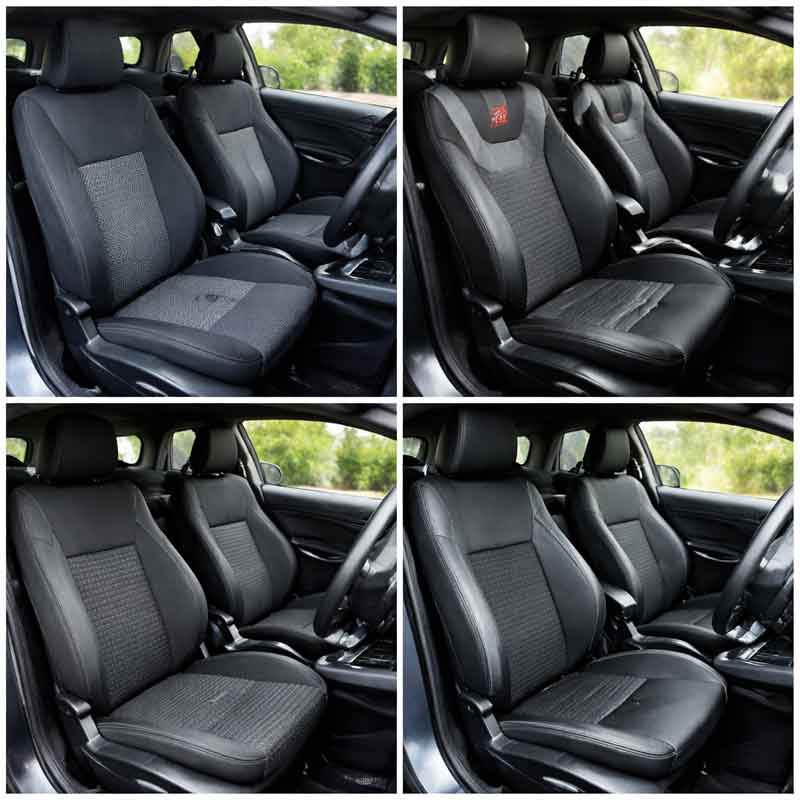
We spend hours in them, yet we rarely talk about them. Today, we’re putting the spotlight on the Ford Fiesta Mk7 front seats. Whether you’re a used buyer wondering if the base model will give you backache, or an enthusiast looking to swap in a sportier chair, understanding these seats is key to your Fiesta experience.
More Than Just a Place to Sit
The Mk7, launched in 2017, was a massive leap forward for Ford in terms of interior quality. Gone were the hard plastics of the previous generation; in came a cabin that finally felt premium . The seats were a huge part of this transformation.
Ford designed the front seats to offer "greater side-to-side support" compared to the old Mk6, and the materials used across the range improved drastically . But not all Fiesta front seats are created equal. Depending on the trim level—from the base Studio to the luxurious Vignale or the sporty ST-Line—the seats change dramatically to match the car's personality.
To give you a clearer picture, here is how the seats generally broke down across the mainstream range:
The Crucial Detail: Airbags and Safety
Now, here is where we get into the technical, "don't-try-this-at-home" territory. If you are planning to swap those seats—maybe you found a set of luxurious heated leather seats from a scrapyard—you need to know about the Side Airbags.
The Ford Fiesta Mk7, like almost all modern cars, has side airbags built directly into the front seats. They are a critical part of the Supplemental Restraint System (SRS). If you unplug a seat without disconnecting the battery, you risk deploying an airbag, which is dangerous and expensive.
If you're doing a swap, the golden rule is to disconnect the battery before you even think about unbolting the seat . Furthermore, once the seat is out, the car will know. You will be greeted by an airbag warning light on the dashboard. This isn't just an annoying light; it means your safety systems are offline. You will need specialist diagnostic equipment (like a V-Linker OBD device) to clear the fault code once the new seat is securely in place . And as one forum user wisely pointed out, driving with the SRS light on could even put you in hot water with your insurance company . So, safety first!
Comfort vs. Support: Finding Your Sweet Spot
If you are looking at a 2020 model or later, you might encounter the "mild hybrid" version of the Fiesta . Mechanically, the seats remain similar, but by this point, Ford had started standardizing features like the 8-inch SYNC3 touchscreen. The seat design subtly evolved to match the new dashboard aesthetics, but the underlying frames and foam profiles stayed largely consistent to maintain that "Fiesta-ness" .
What does this mean for you as a driver? It means you have a choice.
- The Zetec seats are your go-to for a daily commute. They are designed to be your friend on a long motorway slog—supportive without being restrictive.
- The ST-Line seats, however, are designed for the B-roads. They hug you tighter, almost like a bucket seat, ensuring you and your passenger aren't sliding into each other when you take a roundabout with a bit of spirit.
Final Thought: The Unsung Hero
The Ford Fiesta Mk7 is a car that rewards the driver. But a great drive isn't just about the suspension or the steering; it's about the interface between the car and the human. The front seats are that interface. They are sophisticated pieces of engineering that blend comfort, safety (via those side airbags), and style.
So, next time you slide behind the wheel of a Mk7, take a moment to appreciate the chair you're sitting in. Whether it's the embracing hug of the ST-Line or the soft comfort of the Zetec, it’s doing more for your drive than you might think.
How To Remove The Front Seats From A Ford Fiesta Mk7
So, you want to take the seats out of your Ford Fiesta Mk7. Maybe you’ve spilled a milkshake and it’s starting to smell like a dairy farm. Maybe you’re deep into a sound deadening project, or perhaps you’ve scored a set of luxurious leather seats from a scrapyard and need to do a swap. Whatever the reason, pulling the front seats from a Fiesta is a rite of passage for the DIY enthusiast.
It’s one of those jobs that looks intimidating—bolts, wires, heavy objects—but is surprisingly simple. However, and this is a big, bold, underlined "however," there is an invisible elephant in the room: the airbag system.
Before we even think about touching a socket wrench, we need to talk about safety. Because if you get this wrong, you won't just have a broken seat; you'll have a very expensive, and potentially dangerous, repair bill. Let's get into it.
The Golden Rule: Why You Must Disconnect the Battery
If you take only one thing away from this guide, let it be this: disconnect your car's battery before you go anywhere near the seat wiring.
You might be wondering, "Can't I just pull the fuse for the airbag module?" It's a fair question. On the Ford Owners Club forum, a user recently asked the exact same thing, hoping for a shortcut . The consensus from the experienced members? Don't risk it. Removing a fuse isn't enough to guarantee the system is fully inert .
Here's the deal. The Ford Fiesta Mk7, like virtually every modern car, has side airbags built directly into the front seats. These are part of the Supplemental Restraint System (SRS). These systems are designed to deploy in milliseconds during a crash. They are hyper-sensitive. If you unplug the electrical connector under the seat while the battery is still connected, you run a real risk of generating a static spike or a signal that the system interprets as a crash. The result? A side airbag deploying in your face while you're trying to unbolt a seat.
It’s not just dangerous; it’s expensive to replace an airbag. So, step zero, before step one, is to pop the bonnet and disconnect the negative terminal of your battery. Wait a few minutes after disconnecting it to let any residual charge in the system dissipate. Safety first, always.
Tools and Prep: What You'll Need
Once the battery is safely disconnected, you can gather your gear. The good news is that you won't need a garage full of specialist tools. Most of this is straightforward.
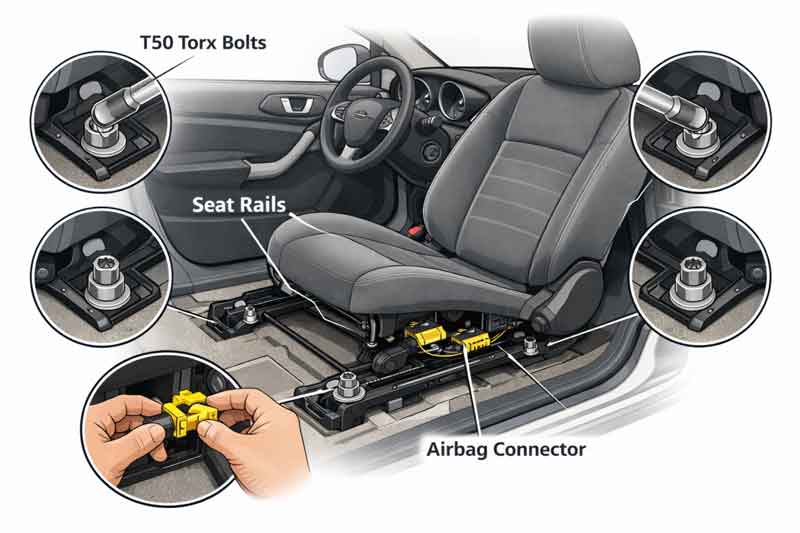
- A Socket Set: You'll primarily need a Torx bit (usually T50 or T55) for the seat bolts, and possibly some standard sockets for other trim pieces.
- Trim Removal Tools: These plastic pry bars are cheap and essential for popping off plastic covers without scratching everything.
- A Pen and Tape: For labelling those electrical connectors.
- A Friend (Optional but Helpful): Fiesta seats aren't massively heavy, but they are awkward. Having a second pair of hands to lift them out of the car makes the job ten times easier and prevents you from scratching your door cards or centre console.
To give you a quick overview of what to expect for the different seats you might encounter, here’s a handy reference table:
| Seat Type | Key Electrical Connections | Main Removal Challenge |
|---|---|---|
| Manual Seat (Standard) | Seatbelt Pretensioner + Occupancy Sensor | Heavy, awkward to lift out. |
| Manual Seat (with Heated Element) | Seatbelt Pretensioner + Occupancy Sensor + Heater Wires | Unplugging the small heater wires without breaking them. |
| Electric/Power Seat | Seatbelt Pretensioner + Occupancy Sensor + Main Motor Harness | Heavy; requires careful maneuvering of the wiring loom. |
The Step-by-Step Removal Guide
Alright, battery is off, tools are ready. Let's get those seats out. This guide assumes you're working on the front seats of a Ford Fiesta Mk7 (2017-onwards) .
Step 1: Slide and Access
Move the seat as far forward as it will go. This gives you access to the rear bolts. Then, move it as far back as possible to access the front bolts. You'll see plastic covers hiding the bolt heads. Gently use your trim removal tools to pop these covers off. Set them aside somewhere safe—they're small and easy to lose.
Step 2: The Bolts
Using the correct Torx bit, start undoing the four bolts (two front, two rear) that hold the seat to the floorpan. Don't completely remove them yet. Loosen them all first, then go around and take them out. This prevents the seat from tipping and putting stress on the last bolt.
Step 3: The Tricky Bit - Electrical Connectors
This is where you need to be patient. Before you can lift the seat out, you need to free the wiring. Tilt the seat carefully to access the underside. You'll find a bundle of wires with connectors. In the Mk7, this usually includes the connector for the seatbelt pretensioner and the occupancy sensor that detects if someone is sitting there.
Important: These connectors often have a safety locking mechanism. Don't just yank on them. Look for a small tab or a slider that needs to be pressed or pulled to release the lock before you can separate the connector. Once unlocked, they should pull apart easily.
Step 4: The Extraction
With the bolts out and the wires unplugged, it's time to lift the seat out. This is the awkward bit. The seat is top-heavy. If you have a friend, have them take the passenger side while you take the driver's side. Lift it straight up and out, being careful not to bang it against the door pillar or the steering wheel (if you're doing the driver's side). Angle it and maneuver it out through the door opening. Once it's free, lay it on its side on a soft blanket or mat to protect the fabric or leather.
The Aftermath: Dealing with the Airbag Warning Light
Okay, so you've got the seat out. The carpets are clean, the sound deadening is in, or the new seat is ready to go in. But here's something that catches a lot of people off guard.
Remember those wires you unplugged? The car's computer knows they're missing. The moment you reconnect the battery, the SRS system will detect a fault. You will be greeted by a persistent, glowing airbag warning light on your dashboard .
This isn't just an annoying little icon. It means your safety systems are partially offline. As one sharp forum user pointed out, driving with the SRS light on could even be an issue with your insurance company . If you were to have an accident, and the insurer found you had a known safety system fault, they might use it to avoid paying out.
So, how do you get rid of it?
Once you've put the seat back in, reconnected all the wiring (making sure the connectors click home securely), and bolted everything back down to the correct torque, you'll need to clear the fault code.
Reconnecting the battery won't make the light go away on its own. The system stores the fault. You will need a diagnostic tool, often an OBD2 scanner that is capable of reading and clearing SRS (Airbag) codes . A basic code reader might only handle engine faults. You need something a bit more sophisticated, like a V-Linker or FORScan, that can talk to the airbag module. Once you clear the codes, the light should go out. If it doesn't, it means there's an actual problem with the connection or a component.
Reinstallation: Just the Reverse
Putting the seat back in is essentially the reverse of removal.
- Carefully lower the seat onto the studs, making sure not to pinch any wires.
- Loosely start all four bolts.
- Tighten them to the manufacturer's specification (you can find the torque settings in a workshop manual).
- Reconnect all electrical connectors until they click.
- Refit the plastic trim covers.
- Reconnect the battery.
Then, grab your diagnostic tool and clear those fault codes.
Final Thought: A Rewarding DIY
Removing the front seats from a Ford Fiesta Mk7 is a fantastic DIY project. It opens up a world of possibilities for deep cleaning, upgrading, or customising your car's interior. As long as you respect the car's safety systems—specifically by disconnecting the battery first and being prepared to reset the airbag light afterwards—it's a job that almost anyone can tackle with a little confidence and the right guide.
So go on, give your Fiesta the spa day it deserves. Just watch out for those airbags.