
Your Ford Focus MK3 Alternator Lowdown
So, your trusty Ford Focus MK3 (that’s the 2011 to 2018 model to most of us) has been acting a bit… sluggish. Maybe the battery light flickered, or the headlights dim at idle. Before you blame the battery for the hundredth time, let’s talk about its partner-in-crime: the alternator. This little powerhouse is the unsung hero of your car’s electrical system, and when it starts to fail, things get interesting.
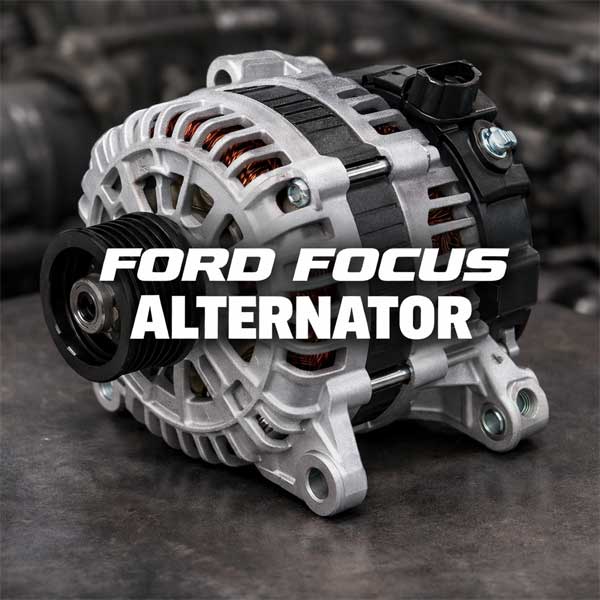
Let’s pop the hood (figuratively) and get into what makes the MK3’s alternator tick, how to spot trouble, and what you need to know if it’s replacement time.
Understanding Your Focus’s Power Source: More Than Just a Generator
Think of the alternator as your car’s on-the-go power plant. While the battery starts the party, the alternator keeps it going. It converts engine power into electrical energy to run everything from your radio to your ECU and, crucially, it recharges the battery as you drive. The MK3 Focus typically uses a Lundell-type (claw-pole) alternator, which is robust and efficient for its class.
Now, here’s where it gets specific. The MK3 wasn’t a one-size-fits-all deal. The most common alternator you’ll find is the 120-amp version, used on a huge range of models with standard electrical loads. However, if your Focus is a high-spec derivative—think a Titanium with every option, or models with heated screens and powerful audio systems—it might be equipped with a more heavy-duty 150-amp unit to handle the extra demand. Always check your vehicle’s sticker or consult a parts diagram to be sure.
Part numbers are your best friend here. Two major OEM numbers you’ll encounter are:
- Ford OEM #: CV6Z-10346-B (common for many 120A applications)
- Visteon (a major supplier) #: 9V14-10300-AA
If you’re sourcing a replacement, matching the amperage and physical configuration (mounting points, pulley type) is critical. A trusted source like Ford's own parts diagrams or reliable motor factors can help you nail the right part.
Spotting the Signs: Is It the Battery or the Alternator?
This is the eternal car question, right? Here’s a quick, relatable cheat sheet:
| Symptom | More Likely the Battery if... | More Likely the Alternator if... |
|---|---|---|
| Car Won’t Start | A single click or total silence, lights are very dim/dead. | It starts but then dies quickly; dashboard is lit but engine won’t turn over reliably. |
| Electrical Issues | Problems occur even before starting the engine. | Problems (dim lights, weak AC) get worse with more load (e.g., when you turn on heated seats) or at idle. |
| Warning Lights | Just a battery light, possibly after a jump. | Battery light is on while driving, often accompanied by other electrical gremlins. |
| Strange Noises | Rare. | A grinding or whining noise from the front of the engine, as the alternator’s bearings or internal components wear out. |
A classic test? With the car running, turn on all the electrical loads (headlights, blower on max, rear defrost). If the lights dim dramatically or you hear the engine struggle, the alternator might not be keeping up. For a definitive check, a simple voltage test (you can find guides on how to perform a basic charging system test yourself) is a great next step.
The Replacement Reality: Insights and Implications
Replacing a Focus MK3 alternator is generally considered a moderate DIY job for the mechanically inclined. It’s mounted at the top of the engine, which is more accessible than in some cars. However, space is tight, and you’ll need to deal with the drive belt tensioner. If you’re not comfortable with that, a trusted mechanic is the way to go.
The big implication of a failing alternator isn’t just an inconvenience—it’s a stranding hazard. It won’t get better on its own. Once output drops, your car is running on borrowed time (and battery juice). Driving with a bad alternator can lead to a dead battery, but worse, it can cause voltage spikes that might damage sensitive electronic control modules in your modern Focus.
When shopping, you have options: new OEM, remanufactured, or aftermarket. Remanufactured units from reputable brands can be a cost-effective and eco-friendly choice, as core components like the housing are reused. Just ensure they come with a solid warranty.
The Final Word
Keeping an eye (and an ear) on your Ford Focus MK3’s alternator can save you from a real headache. It’s a wear item, and by 100,000 miles or so, it’s wise to be vigilant. Understanding the simple signs, knowing the specs for your specific model, and acting before you’re left in the dark—literally—is the key. Your Focus is a great car; a healthy alternator ensures all its clever tech keeps working the way it should, mile after reliable mile.
How To Replace the Alternator on Your Ford Focus MK3: A Hands-On Guide
So, the verdict is in. After a bit of detective work—maybe a battery light that won’t quit, a symphony of strange whines from under the hood, or a classic voltage test—you’ve diagnosed a failing alternator on your Ford Focus MK3. Take a deep breath. While it sounds like a big job, replacing the alternator on this generation of Focus (2011-2018) is famously one of the more accessible DIY repairs. With the right tools, a bit of patience, and this guide, you can save a significant chunk of change and gain that sweet, sweet satisfaction of fixing it yourself.
This guide is tailored for the gasoline-engine models (like the ubiquitous 1.6 Ti-VCT and 2.0 GDI), which have the alternator conveniently mounted on top. If you have a diesel or the sporty ST model, the process can be more complex due to different engine bay layouts. Always double-check your specific configuration before starting.
What You'll Need: Gear Up Before You Get Dirty
Gathering your tools and parts first is half the battle. Nothing kills momentum like running to the auto parts store mid-job.
Tools:
- Basic socket set (metric, typically 8mm-19mm)
- Torx bit set (T30 is crucial) – The Focus loves Torx bolts!
- Long extension bar (6-12 inches)
- Ratchet and a breaker bar (for stubborn bolts)
- Serpentine belt tool or a long 15mm wrench – This is for the belt tensioner. A dedicated tool is cheap and makes life infinitely easier.
- Pliers or a small pry bar
- Jack and jack stands (for safety, even though we're working top-down)
- Gloves and safety glasses
The Main Event: The New Alternator
You have choices here: new OEM, remanufactured, or aftermarket. A quality remanufactured unit from a brand like Lucas or Bosch is often a great balance of reliability and cost. Ensure you get the correct amperage (common are 120A or 150A) and that the connector plug and mounting points match. The OEM part number for a common 120A version is often CV6Z-10346-B, but always verify with your VIN.
Safety First & Pre-Work Checklist:
- Disconnect the Battery! This is non-negotiable. Always disconnect the negative battery terminal first and secure the cable away from the post. This prevents shorts and sparks.
- Let the Engine Cool. Don’t burn yourself on a hot exhaust manifold.
- Take a Phone Picture of the serpentine belt routing before you remove it. This is your cheat sheet for reinstallation.
Step-by-Step: Swapping Out Your Ford Focus MK3 Alternator
Alright, let's get to it. We'll break this down into clear, manageable phases.
Phase 1: Gaining Access and Removing the Belt
First, pop the hood and locate the alternator. It’s on the front of the engine, held by two main bolts, with a fat power cable and a small electrical connector.
- Remove the Engine Cover: If present, it usually just pulls straight up.
- Locate the Belt Tensioner: The serpentine belt is kept tight by an automatic tensioner pulley. You'll see it near the alternator. Using your belt tool or 15mm wrench on the square peg in the center of the tensioner, rotate it toward the engine (clockwise). This releases tension on the belt.
- Slip Off the Belt: With tension released, carefully guide the belt off the alternator pulley. Slowly release the tensioner back. Now you can wiggle the belt off the other pulleys. Refer to your photo if needed.
Phase 2: Unbolting the Old Alternator
With the belt off, the alternator is ready to come out.
- Disconnect the Electricals: Unplug the small electrical connector by pressing the clip and pulling. It can be snug. Then, remove the large power cable nut (usually a 10mm or 13mm). Cover the exposed end with tape or a glove for safety.
- Remove the Mounting Bolts: There are two main bolts. The upper bolt is long and may be a Torx (T30) or hex. The lower bolt is usually accessed from underneath or through the wheel well. For better access, many DIYers safely jack up the front, remove the front passenger-side wheel, and peel back the inner fender liner. This "undercarriage access" makes the lower bolt a breeze. Loosen and remove both bolts.
Phase 3: Installation and Belt Re-Routing
This is the reverse of removal, with a few key tips.
- Compare Old and New: Before installing, hold the new alternator next to the old one. Ensure the mounting lugs and pulleys align perfectly.
- Maneuver It In: Position the new alternator, guiding the lower mount into place first. Hand-thread the bolts to start, ensuring nothing is cross-threaded.
- Reconnect Electricals: Attach the large power cable and tighten the nut securely. Plug in the small connector until it clicks.
- Tighten Mounting Bolts: Tighten the bolts to the proper specification. If you don't have a torque wrench, "good and tight" will suffice, but avoid Hulk-like force. A general spec is around 18-22 ft-lbs (25-30 Nm) for these bolts.
- The Moment of Truth – Re-Routing the Belt: This is where your photo saves the day. Route the belt over all pulleys except the alternator pulley last. Again, use your tool to rotate the tensioner clockwise, slip the belt onto the alternator pulley, and double-check the routing against every pulley in the diagram. Slowly release the tensioner. The belt should be snug with no slack.
Key Insights, Comparisons, and Pro Tips
Here’s the wisdom that turns a stressful job into a smooth operation.
Gas vs. Diesel Dynamic: This guide is optimized for the gasoline engine layout. On the Ford Focus 1.5L or 2.0L TDCi diesel engines, the alternator is often lower down and accessed from underneath, and the oil filter/cooler can be in the way. The job becomes more intensive, often requiring the removal of additional components. Research your specific engine.
The "While You're In There" Check: With the belt off, spin every idler pulley and the tensioner by hand. They should spin smoothly with almost no wobble or grinding. If any feel rough, replace them now. A failed idler pulley can sound just like a bad alternator and will leave you stranded just as fast.
Part Quality Matters: A Quick Comparison
| Feature | Budget Aftermarket | Quality Remanufactured (e.g., Bosch, Lucas) | New OEM |
|---|---|---|---|
| Cost | Lowest | Mid-Range | Highest |
| Core Charge | Usually Yes | Usually Yes | No |
| Reliability | Variable; higher risk | Generally Very Good | Excellent |
| Warranty | Often 1 Year | Often 2-3 Years | Varies |
| Best For | Short-term fix or selling car | The Smart, Long-Term DIYer | Purists/Peace of Mind |
My strong recommendation for the DIYer is the quality remanufactured route from a trusted auto parts supplier. You get OEM-grade components without the OEM price.
Testing Your Work (Safely!):
- Reconnect the negative battery terminal.
- Without starting the car, turn the key to the "ON" position. The battery light on the dash should illuminate. This is good—it means the circuit is recognizing the alternator.
- Start the engine. The battery light should go out within a few seconds.
- Let the car idle. Use a multimeter across the battery terminals. You should see between 13.8 and 14.8 volts. Turn on your headlights, blower fan, and rear defroster. The voltage should stay steady in that range, not dropping below 13.5V. This confirms a healthy charging system.
Final Thoughts and When to Call a Pro
Congratulations! If you’ve followed these steps, you’ve just successfully performed a repair that would have cost $500-$800 at a shop, for just the price of the part and your time. You’ve also gained an intimate understanding of a critical part of your car.
Know Your Limits: If at any point you felt overwhelmed, or if your specific model (like an ST or diesel) presents major obstacles, there is zero shame in calling a professional. A good independent mechanic specializing in Ford vehicles can do this job efficiently. The key insight is that now you are informed. You can discuss the job knowledgeably and avoid being upsold on unnecessary parts or labor.
The Ford Focus MK3 is a wonderfully DIY-friendly car in many respects, and the alternator replacement is a prime example. By tackling this job, you’ve not only fixed a problem but also empowered yourself for the next automotive challenge. Keep that socket set handy, and enjoy the reliable hum of a properly charging electrical system. Great work